
 Available in US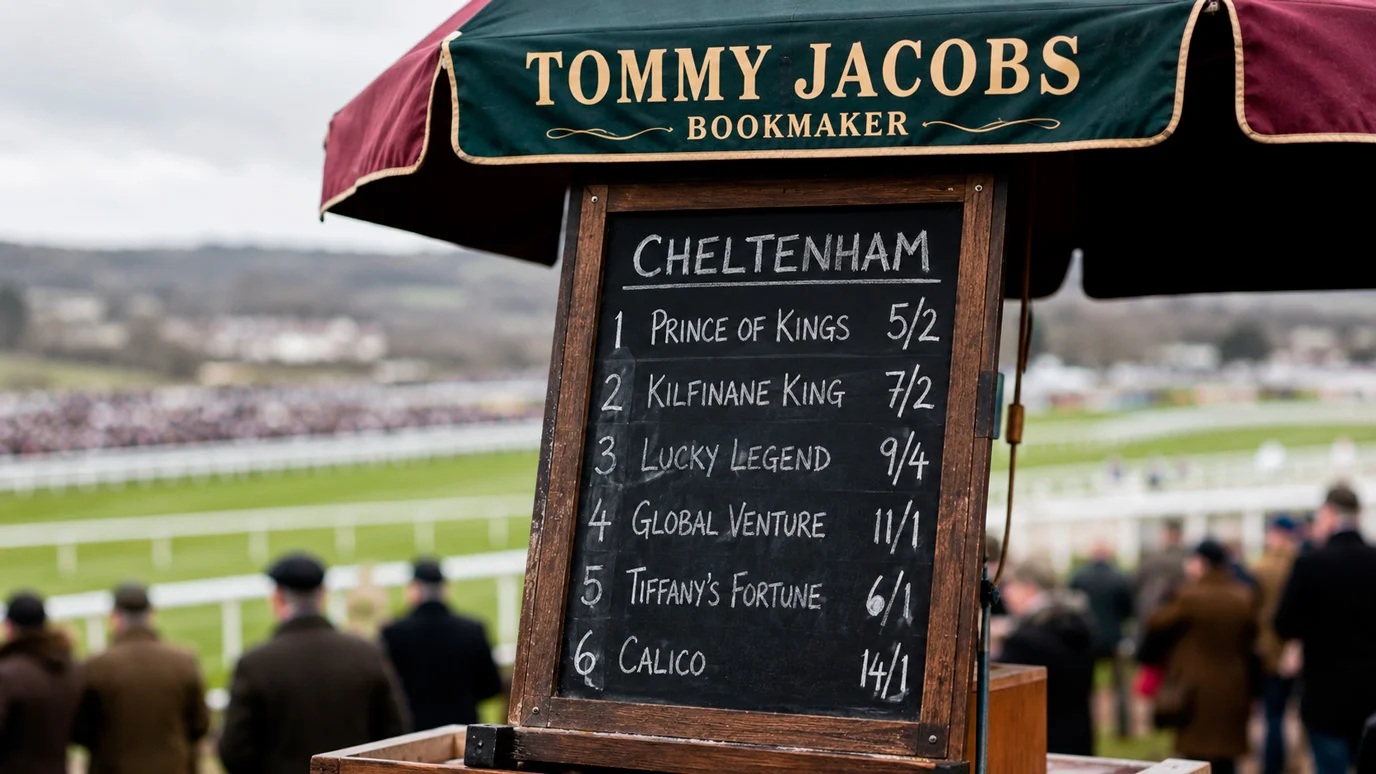
The Two Prices on Every UK Race
I had a debate with a friend last summer about whether he should take 9/2 in the morning on a Glorious Goodwood selection or wait for the starting price. He waited. The horse went off at 7/2 SP. He won, but he won less than he would have done. That’s the early-price-versus-SP decision in one sentence, and every UK punter makes it dozens of times a year, usually without consciously thinking about it.
Every UK race generates two distinct prices you can bet at. The early price – sometimes called the board price – is what the bookmakers quote from the morning onwards, refreshed as money moves and as race-day intelligence trickles in. The starting price (SP) is the official price calculated at the moment the race starts, derived from a sample of on-course bookmaker prices. You can lock in the early price by betting before the off, or you can take SP and accept whatever the price is at race time.
The decision matters because the two prices won’t be the same. They’ll drift apart in one direction or the other based on which way the money’s moving. A horse the public loves will see its early price get hammered shorter through the morning, and SP will land below the morning quote. A horse no one wants will drift longer, and SP will land above. The skill is reading which way a particular runner will move and choosing your moment accordingly.
How the Starting Price Is Calculated
The starting price isn’t an algorithm and it isn’t a layer’s decision. It’s a sample. SP Sample is a system that takes a snapshot of prices from a representative panel of on-course bookmakers at the moment the race starts, and computes a consensus number for each runner. The result is the official SP, which appears alongside the result on every UK racecard and is the basis on which SP bets are settled.
The Industry Starting Price (ISP) is the version used for SP bet settlement at most UK bookmakers. ISP is derived by averaging the prices laid by a defined group of on-course layers – historically the bookmakers in the main ring at the racecourse – at race start. The methodology has shifted over the years as the on-course betting ring has shrunk, but the principle holds: SP reflects what the on-course layers were collectively quoting at the off.
The weight of money is what moves SP. A horse attracting heavy stakes through the morning sees its on-course price contract, and SP comes in. A horse with no money on it drifts, and SP lengthens. The 82.2 per cent of UK races that started within two minutes of their scheduled time in 2025 – up from 79.2 per cent in 2024 and 72.7 per cent in 2023 – means the SP sample window is increasingly predictable. Punters who time their bets near the off get something close to the SP without paying the slight premium that “guaranteed SP” sometimes carries with bookmakers.
One quirk of SP – it gets reformed if a race is significantly delayed or if a runner is withdrawn at the start. The sample is retaken once the market re-prices, and the new SP becomes the basis for settlement. Punters who took SP on the original market get the new SP, not the original quote.
When Early Prices Appear and Move
The early-price book opens in the morning of the race. The standard window across major UK operators is roughly 8 to 10 AM for afternoon Flat and jumps cards, with prices refreshing as the morning develops and as confirmed declared runners and going reports finalise. Markets on evening cards open later. Saturday markets typically open the evening before for major fixtures, with prices firming up after Sunday paper tipsters drop their selections.
The shape of the morning price movement is fairly predictable. Tipster movers – horses picked by the major Sunday papers, the Racing Post pullouts, the major ITV preview shows – see their prices contract by mid-morning, often substantially. Stable confidence whispers move prices in a quieter way, generally producing slower contraction. Late information – going changes, late withdrawals, jockey changes – produces sharper, faster moves that can swing a price multiple points in minutes.
Reading the morning market is a separate skill from reading form. Some punters never bother with it and bet at SP every time. Others live for the morning price hunt, looking for horses they fancy that the market hasn’t yet found, then locking in before the contraction. The “first show” price – the first price quoted by a bookmaker for that race in the morning – is often the best price you’ll see all day on a horse that ends up shorter at SP, but it requires being up early on the right Saturday and knowing the operators that lead the market on first shows.
The major UK online betting market settled to £9.12 billion turnover in 2022-23, down £900 million on the previous year. A meaningful chunk of that volume flows through morning markets, with the SP layer covering races where punters don’t get to a bet in time. Both segments matter to the layers; both segments matter to the punter making strategic price decisions.
BOG Makes Early Prices Less Risky
The whole calculus of early-price-versus-SP changed when Best Odds Guaranteed went mainstream. BOG converts an early-price bet into a one-way option – you take the early price, and if SP ends up shorter, you keep your early price; if SP ends up longer, BOG pays you the higher SP. The downside risk of taking an early price is removed.
That asymmetry has profound implications for how you bet. With BOG live, there’s almost no reason to take SP except in two specific cases. First, when you don’t trust your read on which way the market will move and don’t want to think about timing. Second, when the operator excludes your selection from BOG – handicaps occasionally get carved out by certain layers, and the BOG clauses around multiples can be restrictive. Outside those, taking the morning price gives you the same upside as SP plus a floor at the morning quote.
The catch is that BOG isn’t universal and the operators run it on slightly different terms. Some apply BOG from 8 AM, some from 10 AM, some from race-day open. Some exclude certain meetings or certain bet types. Some cap BOG payouts at a maximum win. Reading the BOG terms before relying on the asymmetry is the first job. I’ve written about this in detail in the operator features piece, because the way BOG, NRNB and Rule 4 interact decides settlement outcomes more than people realise.
Without BOG, taking an early price is a genuine bet on market direction – you’re locking in your price and accepting whatever happens to the market afterwards. With BOG, you’re effectively getting the better of the two prices, which is a free option.
When SP Is Actually the Better Bet
There are races where SP outperforms the early price routinely, and the pattern is reliable enough to be worth knowing. Races where heavy weight of money pushes the favourite shorter through the morning are the obvious case. If a horse opens 4/1 and you can see it being hammered by tipster columns through the morning, the SP will land at 3/1 or shorter. Taking SP gives you the early price’s bonus protection if you’re wrong about the direction, and the longer odds if you’re right that the market will move further.
The mechanics are inverted for drifters. A horse opening 6/1 that no one wants drifts to 9/1 by the off. Taking the morning price locks you in at 6/1. Taking SP gives you 9/1. Drifters favour SP punters, steamers favour early-price punters. The trick is identifying which is which before the market completes its move – which sounds simple and isn’t.
There’s a second case for SP: when you’re betting late and the market is already in its final shape. The last fifteen minutes before the off, the price is generally near where it will land. Bothering to lock in a board price at that point doesn’t capture much value, and SP comes in cleaner. Plus you avoid the friction of placing a bet at one price only to see it move two ticks in your favour two minutes later.
The final case is races where on-course liquidity is thin and morning prices are unreliable. Small mid-week meetings – a Monday at Pontefract or a Thursday at Newcastle’s evening floodlit card – sometimes have layer prices that don’t update through the day and don’t reflect actual race-day money flow. The SP on those races often diverges substantially from the morning quotes. Taking SP rather than committing to a stale early price is the safer play. The same logic applies on the Premier Fixtures days where average turnover per race in 2025 rose 2.7 per cent – the price action there is genuine and the markets are deep enough that SP behaves predictably.
SP and Early Price Questions
Punters routinely ask about two edge cases – what happens when SP can’t be formed because of a delay, and whether SP can be applied to ante-post bets. Both have specific answers under standard UK rules.
Articles
Created by the "typesbethors" editorial team.
