
 Available in US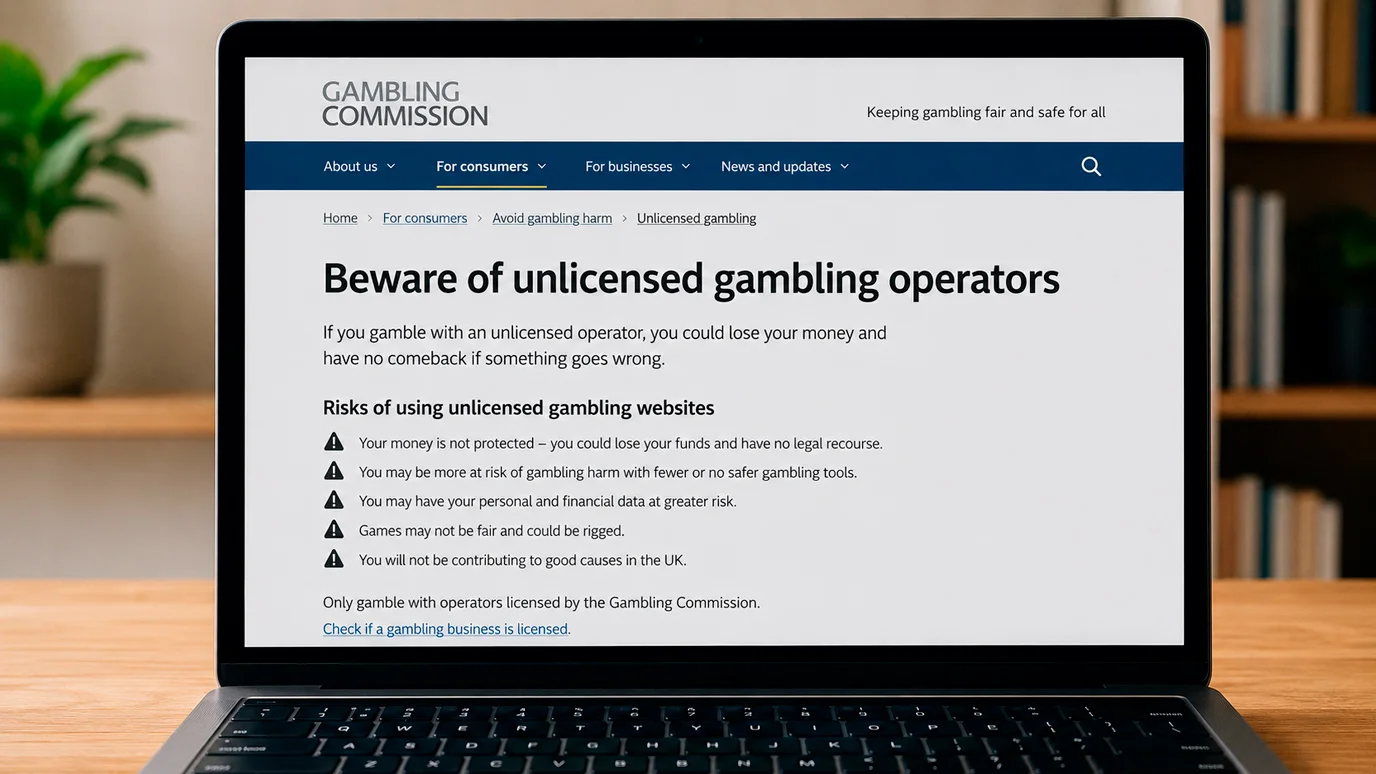
The Number That Should Worry Every UK Punter
Black-market traffic to unlicensed UK-facing betting sites is up 500 per cent over the past three years. The 2025 Grand National alone saw £9.4 million staked through unlicensed operators by UK punters – money that bypassed the regulated UK racing economy entirely. One in three high-stakes punters who reported £1,000-plus per transaction had used an unregulated site within the previous 12 months. These numbers come from credible industry sources tracking the black-market migration that’s been one of the most concerning regulatory side-effects of the affordability check regime.
As Grainne Hurst from the Betting and Gaming Council stated bluntly: “These parasite operators don’t pay tax, don’t care about safer gambling, and do not contribute a penny to the levy. We are committed to working with the regulator, the government and the industry to find a workable solution which protects punters and our world-class horseracing industry.” The black market is not a fringe concern – it’s measurably eroding the funding base of UK racing while exposing punters to the operational and financial risks that the licensed sector specifically addresses.
This piece walks through why black-market sites attract UK punters, what specific risks come with using them, and the contrast with the licensed UK operator framework. Understanding the trade-off properly is essential for any punter who’s been tempted by the higher limits and lighter checks that unlicensed sites advertise.
What Counts as a Black Market Operator
A black-market operator, in UK regulatory terms, is any gambling business serving UK customers without holding a UK Gambling Commission licence. This includes offshore-licensed operators that accept UK customers despite not being licensed here, peer-to-peer betting platforms operating outside UK regulatory oversight, and entirely unregulated operators running through anonymous infrastructure.
The legal status is unambiguous: serving UK customers without a UK licence is a regulatory offence for the operator. UK customers using such sites are not themselves committing an offence by placing bets, but they receive none of the protections that the UK licensing regime requires of compliant operators. The asymmetry – operators face enforcement, customers face risk without enforcement protection – is the core consumer harm dimension of black-market activity.
Common indicators of an unlicensed operator: no UK Gambling Commission licence number displayed on the homepage, no clear UK regulatory address, payment methods that involve cryptocurrency or unusual transfer mechanisms, customer support based outside the UK with no UK contact options, terms and conditions that don’t reference UK regulatory frameworks. Licensed UK operators must display their UKGC licence number prominently and clearly identify their UK regulatory status.
Some operators occupy a grey zone – licensed in offshore jurisdictions (Curaçao, Malta historically before EU regulatory tightening, various Caribbean jurisdictions) that accept UK customers in violation of UK regulations but with some regulatory oversight from their home jurisdiction. The protection from offshore regulation is generally weaker than UK protection, and the practical recourse for UK customers in dispute scenarios is much more limited.
Why UK Punters Are Tempted
The migration to black-market sites has specific structural drivers. The affordability check regime – with its £150 monthly deposit trigger introduced in February 2025 – has pushed some high-stakes punters off licensed UK operators where the documentation requirements feel intrusive. The Big Punting Survey’s one-in-three figure on high-stakes punters using unregulated sites tracks closely with the affordability check rollout timeline.
Higher betting limits attract bigger punters. Black-market sites typically don’t apply affordability checks, don’t impose deposit limits, and accept stake sizes well beyond what licensed UK operators would permit without enhanced verification. For a punter who routinely wants to stake £500 or £1,000 on a Grand National runner, the friction of UK affordability documentation makes the unlicensed alternative feel operationally simpler.
Better headline odds is a marketing claim that doesn’t always survive scrutiny but is part of the pitch. Some black-market sites quote prices that look superior to UK licensed operator prices on marquee races, often by running thin liquidity that can absorb only modest stakes at the headline price before moving sharply. The displayed price is a hook; the executable price for serious stakes is often closer to UK market levels.
And cryptocurrency-based betting attracts a specific subset of punters who want to operate outside the conventional banking infrastructure that affordability checks query. Bitcoin and other cryptocurrency deposits don’t appear on UK credit reference agency reports, which technically means an affordability check wouldn’t capture them – but the operators accepting those deposits are usually unlicensed, with all the attendant risks.
The Specific Risks You Take
Black-market operators don’t provide segregated player funds protection. UK-licensed operators are required to hold customer deposits in segregated accounts that protect those funds from the operator’s commercial creditors in the event of business failure. Unlicensed operators have no such requirement – your deposit can simply disappear if the operator goes under, with no insolvency recovery path.
Dispute resolution is effectively nonexistent. UK-licensed operators participate in the Independent Betting Adjudication Service or similar ADR (alternative dispute resolution) bodies, which provide a path for resolving complaints that the operator hasn’t satisfactorily addressed. Black-market operators may have terms requiring disputes to be resolved in their home jurisdiction’s courts – sometimes courts in Curaçao or other offshore locations – making practical recourse for UK customers extremely costly relative to any reasonable claim size.
Bet settlement disputes can leave punters with nothing. UK-licensed operators must follow Gambling Commission requirements on bet settlement transparency and dispute escalation. Black-market operators can simply void winning bets, decline to settle, or claim “irregular activity” without external review. Punters who’ve won substantial sums on unlicensed sites have repeatedly reported finding their accounts frozen and winnings unrecoverable – and with no UK regulatory body able to compel settlement.
Withdrawal restrictions are commonly imposed after wins. Pattern reports from black-market site users include progressive increases in verification documentation required for withdrawals, frequent technical failures during withdrawal attempts, currency conversion margins that erode payout values, and sometimes complete refusal to process withdrawals citing unspecified compliance reviews. The deposit side is frictionless; the withdrawal side is where the operator’s commercial interest in retaining funds becomes apparent.
What UK Racing Loses to the Black Market
The £9.4 million Grand National 2025 figure that flowed through unlicensed operators is money that didn’t contribute to the Horserace Betting Levy. The HBLB collected £108.9 million in 2024-25 – the highest annual figure since 2017 – but the black-market migration is a structural drag on continued growth. As Alan Delmonte from HBLB observed: “Levy income having risen for a fourth consecutive period, it may seem counterintuitive that the Board continues to express caution about the sustainability of this trend. This wariness derives from an ongoing fall in betting turnover on British horseracing. We are seeing structural decline. We see consistent declines in turnover and gross win across the licensed sector during a period of unlawful operators marketing strongly to British consumers.”
The Levy funds prize money, training programmes, integrity services, and infrastructure investment across UK racing. Money lost to the black market is money lost to prize money for horses running at racecourses across the UK – from Wolverhampton midweek to Cheltenham Festival. The compound effect on the racing economy is structural rather than acute, but it’s measurable and growing.
The 21,728 horses in training in 2025 – down 2.3 per cent year on year and continuing a contraction trend – partly reflects the funding pressure on the industry’s lower tiers where smaller trainers depend on prize money sustainability. The cumulative effect of black-market revenue leakage on training operations is one of the genuine economic harms that the regulatory regime is trying to address.
Hurst put the broader point on Netherlands comparison: “Putting Britain in the same bracket as the Netherlands with our overall remote gambling duty rate, which crashed the licensed market and led to a massive 30 per cent of all betting being conducted via the black market.” The Netherlands example is a cautionary tale that the UK is trying to avoid through targeted duty differentials and the cosmetic exemption for racing-specific betting.
How to Verify a Site Is Properly Licensed
The verification process is straightforward and takes about two minutes. Step one: scroll to the bottom of the site’s homepage and look for the UK Gambling Commission licence statement. Licensed operators must display their UKGC licence number and a statement that they’re licensed by the Commission. The licence number is typically a five-to-seven-digit string preceded by “Account No” or similar identifier.
Step two: cross-check the licence number on the UKGC’s public register. The Gambling Commission’s website maintains a searchable public register of all licensed operators, with the licence numbers, the operating entity names, and any compliance restrictions. If the number on the site matches a current active licence on the register, the operator is genuinely licensed. If the number is missing, looks fake, or doesn’t match the register, the site is operating outside the UK regulatory framework.
Step three: check for the standard UK operator commitments. Licensed UK operators must offer self-exclusion through the GAMSTOP scheme, must participate in the deposit-limit tools, must offer time-out options, and must have published responsible gambling resources. The presence of these features is a positive signal; their absence is a strong negative signal.
Step four: review the payment method options. Licensed UK operators support standard UK payment methods – debit cards through major UK banks, bank transfers, in some cases UK e-wallet services. They typically don’t support cryptocurrency for direct deposits (UK regulatory restrictions have effectively eliminated this option for licensed sites). Operators primarily or exclusively supporting cryptocurrency deposits are almost certainly unlicensed in the UK sense.
The wider context of how the affordability check framework specifically interacts with the legitimate-operator economics is in the affordability checks piece, which covers the regulated side of the picture that the black market is positioning itself against.
Black Market Questions
Two questions come up routinely from punters considering or recovering from unlicensed-site usage – whether wins from unlicensed sites are legally protected, and how to recover from account problems on offshore operators.
Articles
Published by the typesbethors team.
