
 Available in US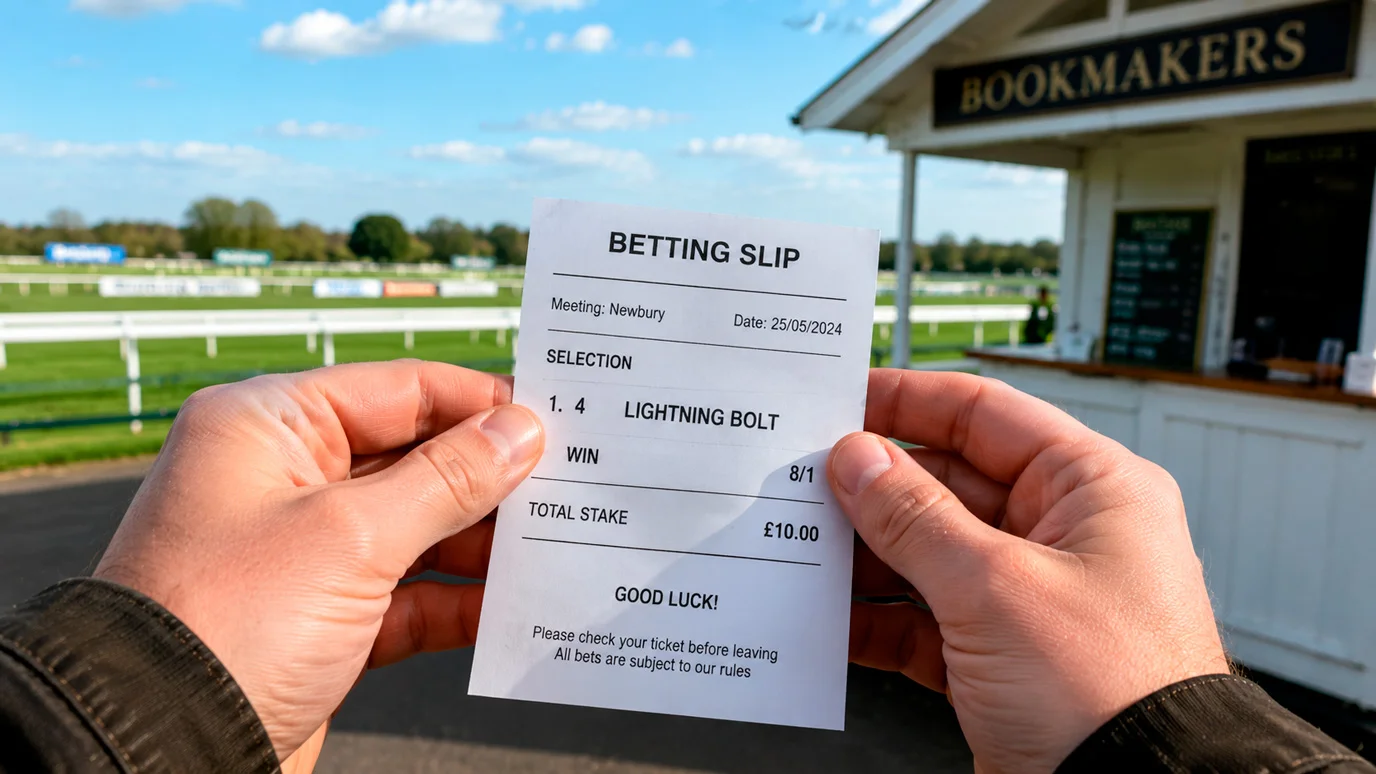
Win Single Strategy: Odds Conversion and Returns Math
The first bet I ever placed was a win single. Two quid on a hurdler at Plumpton, scribbled on a slip in 2016. The horse won at 11/2 and I walked out £13 heavier on my way out. Nine years later, the win single is still the bet I open every Saturday with, and it’s still the bet I recommend to anyone who asks me where to start.
A win single does exactly one thing. You pick a horse, you pay your stake, and if your horse crosses the line first, the bet pays. Second is nothing. Third is nothing. Photo-finish second by a nose is nothing. There’s no place portion, no second-chance leg, no clever maths between you and settlement. The horse wins or it doesn’t.
That clarity is why the win single survives every fashion that’s swept UK betting. Cash out came and went through three cycles. Bet builders ate football. Every operator tried to push you into multiples. The win single just sat there, doing its job, paying out clean. When I’m teaching someone who’s never had a bet before, I make them place ten win singles before I’ll talk to them about how each-way works, never mind a Lucky 15. You can’t understand the more complex bets without understanding what they’re built on, and they’re all built on the win single.
Reading Fractional Odds Like a Punter
Ask a French punter to explain decimal odds and they’ll do it in twenty seconds. Ask a British punter to explain fractional odds and you’ll get a story about their granddad’s first Saturday in a Mecca shop. We learned this notation through osmosis, and most of us never stopped to ask why we still use it. The reason is simple – it tells you the profit, not the return.
5/1 means you win five pounds in profit for every one pound staked. 9/2 means you win nine for every two – work it out and that’s £4.50 in profit per pound. Evens means you double your money, profit equals stake. 1/3 means you only get one pound back for every three you put down, plus your stake – the territory of the hot favourite, the odds-on jolly. The smaller the right-hand number, the shorter the price, the more probable the bookmaker thinks the horse is.
Decimal odds are creeping in – most UK apps will toggle them in settings – and they’re useful for one specific job: comparing prices fast. 5/1 is 6.0 in decimal. 9/2 is 5.5. 11/4 is 3.75. The decimal number tells you the total return per pound, stake included, so to convert back to profit you subtract one. I prefer fractional for racing because the rounding errors disappear and place fractions like 1/4 and 1/5 read naturally in the same notation. But the implied probability is the number that matters either way – 5/1 implies the horse should win one race in six. If you think it’ll win more often than that, the price is value. If you think less, it’s not.
That probability check is the whole job. I look at a UK racecard and read every price as a question: does this horse win more or less often than the price suggests? When 43% of punters planning a Grand National bet say they’ll stake under £10, most of them aren’t doing that calculation. They’re picking the name they like and taking whatever number is next to it. The bookmaker is doing the calculation. That’s how the bookmaker stays in business.
How a £10 Stake Pays Out
The settlement maths on a win single is the easiest in betting, which is exactly why it’s the bet I use to teach my nephew. He’s seventeen, can’t bet legally yet, but he can do the sums on paper while we watch ITV Racing on a Saturday. Multiply the stake by the fraction. Add the stake back. Done.
£10 at 5/1 – multiply ten by five, that’s fifty pounds in profit. Add your tenner back and you get £60 returned to your account. £10 at 5/2 – ten times two-and-a-half, that’s £25 profit, £35 returned. £10 at evens – straight double, £20 back. £10 at 1/3 – about £3.33 profit, £13.33 returned, which is why short-priced favourites feel like such hard work for so little reward.
The longer prices are where the maths starts feeling more like real money. £10 at 20/1 is £200 profit, £210 back. £10 at 50/1 is £500 profit, £510 back. £10 at 100/1 – and I have collected on a couple over the years – is £1,000 profit, £1,010 back. That’s why people remember the names of their big-priced winners for years. I still remember every 33/1 winner I’ve had. I don’t remember the 6/4 ones.
One quirk worth knowing: if your bookmaker shows decimal odds and you’ve staked £10 at 6.0, the returned figure includes your stake. £10 × 6.0 = £60 returned, same as 5/1 fractional. Don’t double-count by adding your stake again. New punters do this every Saturday and convince themselves the operator has shorted them. They haven’t.
Races Where Only a Win Bet Is Offered
I logged into my account one Tuesday afternoon at Wetherby last winter and tried to place an each-way on a five-runner novice hurdle. The slip refused. Win only. I get this question constantly – why won’t my bookmaker let me have an each-way on this race – and the answer comes down to runner count.
UK betting follows a near-universal rule. If a race has fewer than five runners, you usually get win-only markets, because there aren’t enough horses for place terms to make sense – three places paid in a four-runner race would be a giveaway. Five to seven runners, most layers still restrict you to win-only on non-handicaps, and offer two places at 1/4 odds on some handicaps depending on house rules. Eight runners and up is where each-way properly kicks in: three places at 1/5 on non-handicaps, three at 1/5 or 1/4 on handicaps depending on field size, then four places at 1/4 once a handicap hits sixteen runners.
What this means practically is that a chunk of UK racing is win-only by default. Walk-over conditions races, weak novice events, summer Flat cards on Mondays at Ayr or Brighton where six runners is a busy field – all win-only. The good news for the punter is that win-only races strip away the place margin a bookmaker bakes into each-way prices. You get a cleaner read on the win price because there’s nothing else propping up the market.
The flip side: in a five-runner conditions race with a 4/7 jolly, you’ve effectively got one bet to make and a tough one. There’s no place safety net. Either back the favourite at a price that hurts, or take a swing at a 9/2 second-favourite and pray. I tend to leave win-only short-field races alone unless I have a genuine opinion. The maths doesn’t reward guessing in markets that thin.
Why the Win Single Still Owns Grand National Day
Twelve million people put a bet on the Grand National every year. That’s not a typo. Roughly one in five UK adults has a punt on a single race that takes nine minutes from off to first past the post. And eighty-two per cent of those stakes are five pounds or less – fivers, pound coins, virtual £2 chips through an app for a horse picked because the name reminded someone of their nan.
The bet they’re placing, almost universally, is a win single. Not because they’ve thought about it, but because that’s what the Saturday teatime punter understands. Pick a horse, watch the race, win or lose, done in under an hour from app open to settlement. The Grand National generates up to six times the betting turnover of the Cheltenham Gold Cup and pulls in roughly seven hundred per cent more bets than its nearest rival. None of that volume is driven by sophisticated punters perming Lucky 15s. It’s driven by the win single, played by a nation that mostly bets on this one race a year.
There’s a useful lesson for the serious punter buried in that. The 12 million casual stakes are the entire reason Grand National prices look the way they do – bookmakers know the money is splashing on the well-known names, the Irish-trained favourites, the horses the BBC magazine ran a story about. That weight of soft money distorts the market against the recreational pick and in favour of anything those punters haven’t heard of. I’ve had more big-priced Grand National winners by reading the racecard than by reading the Sun.
The same dynamic plays out on Cheltenham Gold Cup day and Derby day, just at smaller scale. Big-event races draw in once-a-year punters whose default bet is the win single. The professional punter’s edge isn’t in playing a different bet type. It’s in spotting where the soft money lands and going somewhere else.
Win Single Questions
The win single looks the simplest bet on a UK racecard, and the maths is. The edge cases are where new punters slip. Two questions land in my inbox more than any others – what happens when your horse doesn’t run, and whether Best Odds Guaranteed kicks in. The answers below are the standard treatment across UK licensed operators, with the usual caveat that house rules vary at the margin.
Articles
Prepared by the typesbethors editorial staff.
