
 Available in US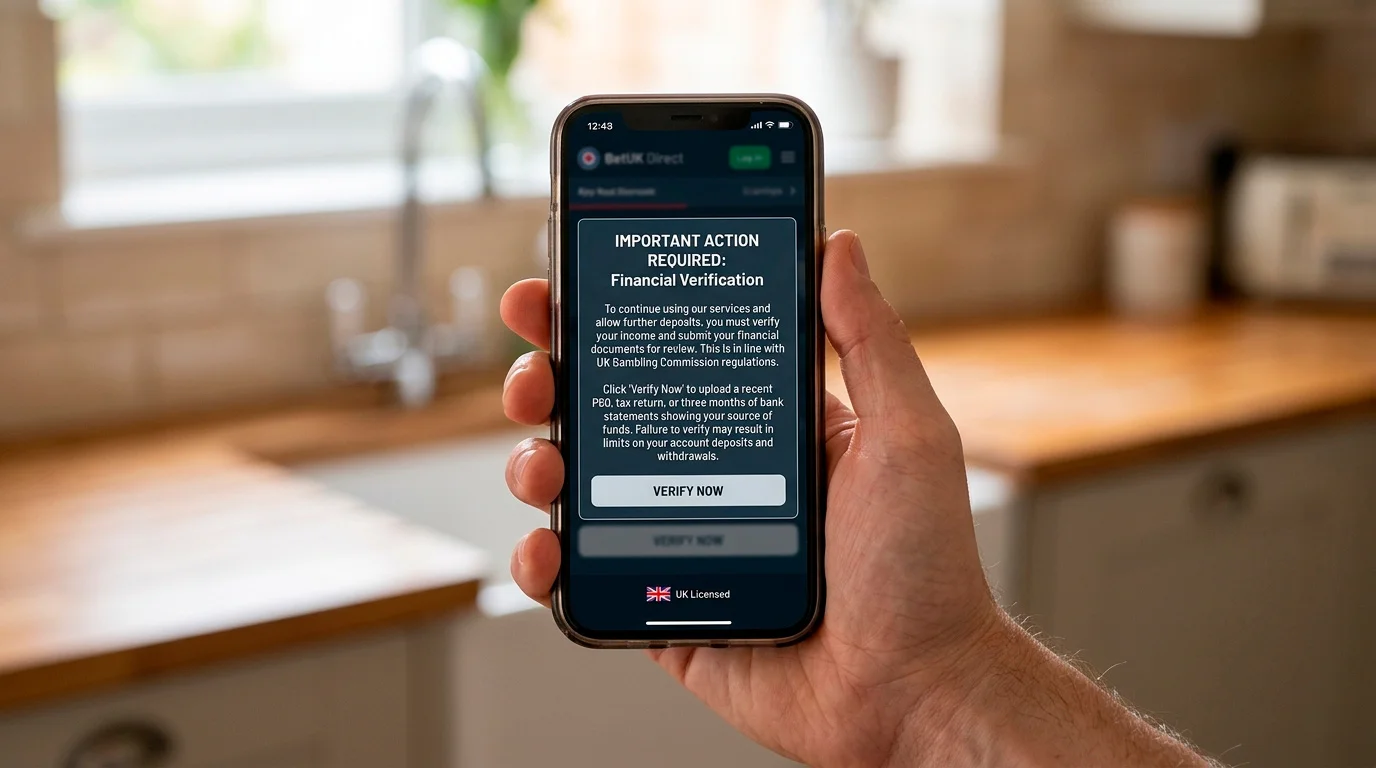
UKGC Regulations: Staking Triggers and Evidence Levels
In February 2025 the UK Gambling Commission lowered the trigger threshold for light-touch financial vulnerability checks from £500 in monthly deposits to £150. That single number – £150 in a calendar month – quietly rewrote how regular horseracing punters fund their betting accounts. The Big Punting Survey found that one in three respondents who staked £1,000-plus per transaction had used an unregulated site within the previous 12 months, with black-market traffic up 500 per cent over three years coinciding with the affordability check rollout. As Grainne Hurst from the BGC put it: “These parasite operators don’t pay tax, don’t care about safer gambling, and do not contribute a penny to the levy.” The affordability regime’s intent is punter protection; its measurable effect has been a partial migration of high-stakes punting away from licensed UK operators.
An affordability check, in plain terms, is the operator confirming that the punter can afford their level of betting activity. Light-touch checks at the £150 trigger involve reviewing public-record data – credit reference agency reports, electoral roll, county court judgement records. Heavier checks at higher thresholds can include requesting bank statements, payslips, or other financial documentation. The check exists to protect punters from getting into financial harm; the implementation has been controversial since the regime began in August 2024.
For horseracing punters specifically, the affordability regime matters because the £150 monthly deposit threshold is easily crossed by anyone betting more than the occasional £10 each-way on Saturdays. A regular Cheltenham and Aintree punter, plus a few Royal Ascot bets, plus midweek smaller stakes – that level of activity routinely sees punters depositing £200 or £300 in a busy month, well past the £150 light-touch threshold.
How the Light-Touch Check Actually Works
The £150 monthly deposit trigger initiates an automatic background check against public-record databases. The operator doesn’t typically ask you for documents; they query the credit reference agencies and assess whether your financial profile suggests the betting activity is affordable. The check happens behind the scenes – most punters experience it as a brief delay on a deposit or a one-time prompt to confirm their personal details.
The check works on a “vulnerability indicator” model rather than a pass-fail income test. If the credit reference data shows defaults, county court judgements, debt management plans, or recent bankruptcies, the check flags the account for enhanced scrutiny. If the data shows a clean profile and stable financial history, the check passes without further intervention and the account continues normally.
Failure of the light-touch check can mean one of several outcomes depending on the operator. Some operators impose temporary deposit caps until the punter provides documentation. Some restrict bet sizes pending verification. Some pause the account entirely until documents are submitted and reviewed. The variance across operators is wide, and there’s no industry-standard process – each operator implements the UKGC requirement within their own risk framework.
The data underlying these checks isn’t shared between operators by default. A punter who fails a check at one operator can sometimes open an account with a competitor and pass that operator’s check, because each operator runs their own check independently. That fragmentation is partly why the regime has driven black-market migration – punters who hit checks at one operator move to another rather than going through documentation.
Higher Thresholds and Document Requests
Beyond the £150 light-touch trigger, the affordability regime stages additional checks at higher activity levels. The thresholds for these enhanced checks vary by operator but typically kick in at £1,000-plus monthly net losses or £5,000-plus monthly turnover. Enhanced checks usually involve a manual document request – bank statements covering three to six months, sometimes payslips or evidence of income, occasionally tax returns for higher-stakes accounts.
The document request process is where most punter complaints originate. The operators don’t have consistent timelines for reviewing submitted documents – some respond within 24 hours, some take weeks. During the review period, the account is typically capped or partially restricted. Punters who depend on consistent account access for race-day betting find this disruption material to their betting workflow.
The Big Punting Survey’s 2025 finding that one in three high-stakes punters had used unregulated sites in the previous year reflects this friction. The unregulated alternatives don’t apply affordability checks – but they also don’t offer UKGC dispute resolution, segregated player funds protection, or any of the safer-gambling tools that licensed operators provide. The trade for getting around the checks is that you lose the regulatory protection entirely.
Impact on Accumulator and Multi-Race Punters
Affordability checks hit accumulator punters disproportionately because the bet types require fronting larger stakes per ticket. A Lucky 15 at £1 per bet is a £15 outlay. A £5 per bet Lucky 15 is £75. A Heinz at £1 unit is £57. Big-stakes multiples consume deposit capacity quickly, and punters who routinely play full-cover bets at meaningful unit stakes hit the £150 threshold within their first weekend of activity.
The Q1 2025 UK racing turnover decline of 9 per cent year on year, and the further 4.2 per cent reduction through Q3 2025 against the same period in 2024, both partly reflect the affordability regime’s compression of high-stakes activity. Multiples and accumulators are the bet types most affected – single-bet punting at modest stakes generally stays below the trigger thresholds, but punters who built their staking around Lucky 15s and Yankees have had to adjust.
One strategic response some punters use: spreading activity across multiple operators to keep each individual account below trigger thresholds. The legal status of this approach is fine – punters can hold accounts at as many UKGC-licensed operators as they want – but the operational overhead is real. Managing five or six operator accounts simultaneously, tracking which is at what activity level, and switching between them on Saturday morning is more complex than playing through one favoured operator.
The 24.4 million active accounts at remote UK casino, betting and bingo operators at the end of 2024-25 reflect part of this redistribution. Punters who previously concentrated activity at one or two operators are spreading thinner, which raises industry-wide account counts even as turnover compresses.
What to Do When a Check Triggers
If you receive an affordability check prompt during a betting session, the practical response depends on what you’re being asked. A simple personal-details confirmation can usually be completed in minutes without disrupting your betting. A document request is more involved – bank statements typically need to be downloaded from your bank’s online portal and uploaded to the operator’s verification interface.
The defensive posture I recommend to friends is to assume a check will eventually arrive and stay prepared. Keep PDF bank statements for the last six months saved on your phone or in a cloud folder you can access quickly. Know your operator’s verification process before you need it. Don’t try to evade checks by spreading activity across operators in a way that’s obviously coordinated – operators share some information through industry mechanisms and pattern-detection systems can flag suspicious account spreading.
If you genuinely can’t afford the level of betting you’ve been doing, the check is doing its job. The deposit limits, time-out tools, and self-exclusion mechanisms that licensed operators offer are there precisely for this case. Switching to an unlicensed operator to escape the check is the wrong response – you lose the protection, you keep the underlying problem, and you potentially make it worse by removing the accountability mechanism that was flagging it.
For the wider context of how UK racing tax and regulation interact with betting product economics, the tax piece covers the punter-side fiscal picture that sits alongside the affordability framework.
Affordability Questions
Two questions come up most often about affordability checks – whether they affect credit scores, and whether winnings can trigger checks the same way losses can.
Articles
Created by the "typesbethors" editorial team.
