
 Available in US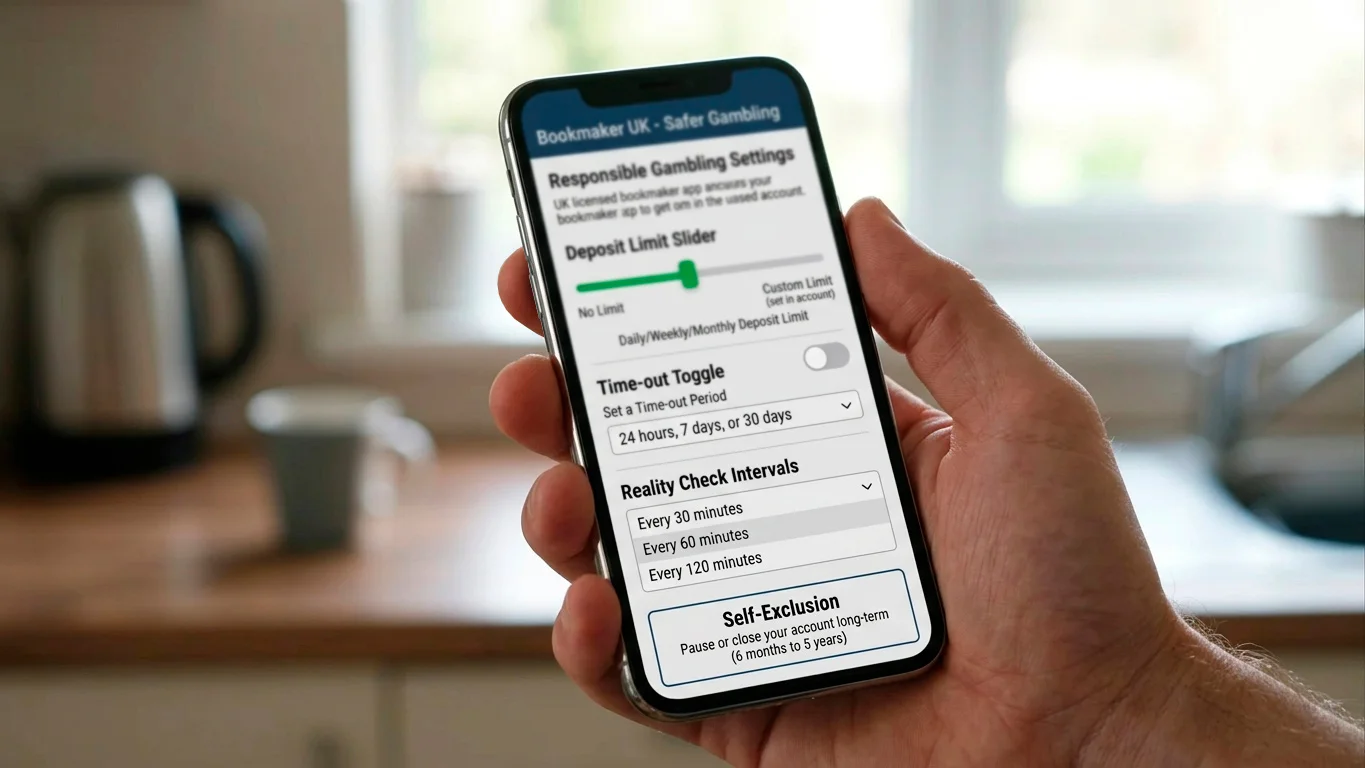
The Tools Are There – Most Punters Don’t Use Them
Every UK-licensed operator offers a comprehensive suite of safer-gambling tools. Deposit limits. Time-out periods. Reality checks. Loss limits. Self-exclusion through GAMSTOP. Affordability checks at activity thresholds. The licensed operator framework has built more punter-protection infrastructure in the last five years than the previous fifty. The challenge isn’t tool availability – it’s that the tools are voluntary in most cases and most punters never engage with them until something has already gone wrong.
This piece walks through the safer-gambling toolkit that’s available to every UK punter today, with practical guidance on which tools matter most for racing-specific betting patterns. The aim isn’t to lecture – it’s to make the tools more visible and easier to deploy proactively rather than reactively. Used early, they’re effective. Used after a problem has developed, they’re harder to fit into a betting workflow that’s already established habits.
The 16 per cent of UK males who bet in the last 4 weeks compared to 4 per cent of UK females (Wave 3 2025 figures) describes the demographic profile of active UK punters. Within that population, problem gambling prevalence varies but a meaningful minority experiences harm. The safer-gambling tools are designed for the full distribution – including the majority who bet within their means and the minority for whom the activity has become problematic.
Deposit Limits Are the Single Most Useful Tool
Deposit limits cap how much money you can put into your betting account over a specified period – daily, weekly, or monthly. The cap is enforced by the operator’s payment system; once the limit is hit, further deposits are rejected until the period resets.
The strategic value of deposit limits is that they create a hard ceiling on betting capacity that’s set in advance, when you’re thinking clearly, rather than mid-session when emotional pressures might push you toward larger deposits. A deposit limit of £200 per month set proactively means that even if you have a difficult Saturday and want to chase losses, the chase is structurally bounded.
Setting limits requires deliberate action. UK operators must offer deposit limit functionality but they don’t impose default limits – you have to set them. The setting process is typically straightforward (account settings menu, deposit limits section, choose period and amount) but the operator interface doesn’t usually push you toward setting them unless you’re already showing signs of problematic behaviour.
The interplay with affordability checks is worth understanding. The £150 monthly deposit threshold for light-touch affordability checks introduced in February 2025 means that punters depositing more than £150 a month face automatic background verification. Setting your own deposit limit below £150 creates a personal cap that sits below the regulatory check threshold – useful for punters who don’t want any external verification and who can stay within that level comfortably.
Time-Out and Self-Exclusion Mechanisms
Time-out lets you pause your account for a specified period – typically 24 hours, 1 week, or 1 month. During the time-out, you can’t log in, deposit, or place bets. The pause is reversible after the period expires; the account resumes normal operation automatically.
Time-out is the tool I most often recommend to punters who recognise they’re betting more than they want to. The 24-hour pause is short enough to be reversible without feeling punitive, but long enough to break the betting habit pattern that may have developed. A weekend time-out from Friday evening to Monday morning can be transformative for punters who’ve fallen into a “Saturday-all-day-betting” pattern.
Self-exclusion through GAMSTOP is the more substantial option. GAMSTOP is a free service that excludes you from all UK-licensed gambling operators simultaneously for 6 months, 12 months, or 5 years. Registration takes about 5 minutes and the exclusion takes effect within 24 hours across the entire UK licensed sector.
The 5-year option is essentially permanent in practical terms. Punters who self-exclude for 5 years rarely return to UK gambling, partly because the period is long enough to genuinely break the habit and partly because the re-registration process after exclusion ends is deliberately friction-laden.
The black-market alternative is the main weakness of GAMSTOP. The 500 per cent increase in black-market traffic over three years partly reflects punters who’ve self-excluded from UK operators turning to unlicensed sites that don’t participate in GAMSTOP. As Grainne Hurst put it: “These parasite operators don’t pay tax, don’t care about safer gambling, and do not contribute a penny to the levy.” For punters using GAMSTOP, the discipline to avoid black-market alternatives is essential to the exclusion working as intended.
Reality Checks and Session Monitoring
Reality checks are pop-up notifications that interrupt your betting session at intervals you specify – typically every 30 minutes or hour. The notification shows how long you’ve been betting, how much you’ve staked during the session, and the net win or loss position. You acknowledge the notification and choose to continue or close the session.
The value of reality checks is purely informational – they don’t prevent further betting, but they make the session’s cumulative impact visible. A punter who’s been betting for 2 hours with £80 of accumulated losses sees that explicitly when the reality check fires, rather than discovering the cumulative position only at end-of-day account review.
Behavioural research suggests reality checks reduce session length and stake totals by 10-15 per cent on average across the population that uses them. The effect isn’t dramatic but it’s real. Setting reality checks at 30-minute intervals during longer sessions (Saturday racing afternoons in particular) provides regular awareness moments.
Session limits are a stricter version – automatic forced log-out after a specified duration. UK operators offer session limit tools alongside reality checks but session limits are less frequently used because they feel more punitive. The practical effect of a 2-hour session limit on a 5-hour Saturday racing card is that you’d be logged out for several races, which most active punters find too disruptive to adopt.
Affordability Checks From a Punter Perspective
The affordability check framework was rolled out from August 2024 with progressively tighter thresholds. The £150 monthly deposit trigger from February 2025 is the threshold most active punters encounter. Above that level, operators run light-touch checks against credit reference data. Higher activity levels trigger enhanced checks requiring documentation.
From the punter’s standpoint, the affordability framework is a structural safety net rather than a discretionary tool. You don’t opt into affordability checks the way you opt into deposit limits – they apply automatically when activity crosses thresholds. The check is on you whether you want it or not at the relevant activity level.
The strategic implication: punters who want to avoid documentation should set their own deposit limits below the trigger thresholds. A self-imposed £100 per month deposit limit sits comfortably below the £150 light-touch trigger and ensures no automatic check fires. Punters who routinely operate above £150 monthly deposits need to be ready for affordability checks and have documentation prepared.
The cumulative effect of affordability checks across the licensed sector has been turnover compression. Q1 2025 UK racing turnover fell 9 per cent year on year; through Q3 2025 the cumulative decline against the same period in 2024 was 4.2 per cent. As Richard Wayman from the BHA noted: “These figures are very concerning and clearly demonstrate that the cumulative impact of recent regulatory changes is causing financial harm to British racing.”
Recognising the Signs Early
Most problem gambling develops gradually. The early signs are not dramatic – they’re patterns of behaviour that drift from controlled betting toward less-controlled betting over time. Specific patterns worth watching for in horseracing punting:
Increasing stake sizes after losses. A punter who consistently moves from £5 stakes to £10 to £20 over the course of a losing session is showing chase behaviour. Each stake increase is intended to recover losses; the cumulative effect is typically larger losses and more emotional pressure.
Betting on races you wouldn’t normally bet. A pattern where you’re placing bets on midweek minor meetings simply because they’re available, rather than because you have a genuine view on the racing, suggests betting has become the activity rather than the means to an end.
Concealment from family. Hiding the level of betting from spouses, partners, or family members is one of the strongest warning signs of problem gambling. The concealment itself indicates the punter recognises the activity wouldn’t survive scrutiny but isn’t ready to change it.
Borrowing money to bet. Using credit cards (which are now banned for gambling deposits in the UK regulated sector), payday loans, or money borrowed from friends specifically to fund betting is a clear red flag. The structural prohibition on credit card deposits was implemented specifically to prevent this pattern.
Inability to stop after wins. Continued betting after a substantial win, intended to extend the winning streak rather than withdrawing the winnings, is a pattern that often precedes large losses. The discipline to stop after a meaningful win is one of the harder behavioural skills in punting.
Where to Get Help
GamCare is the primary UK charity providing support for problem gambling. They operate a free 24-hour helpline (0808 8020 133) staffed by trained advisors who can discuss your situation confidentially. The helpline doesn’t impose advice – it walks through your circumstances and helps identify next steps.
GambleAware is the funding body for safer-gambling treatment services and provides online resources including self-assessment tools and information about local treatment options. Their website (begambleaware.org) is a starting point for understanding what’s available before engaging with services directly.
The NHS provides specialist gambling treatment through the National Problem Gambling Clinic and several regional clinics. NHS treatment is free at the point of access; referrals can be self-initiated or made through your GP. Treatment includes individual counselling, group therapy, and specialised cognitive behavioural therapy adapted for gambling disorder.
GAMSTOP, as mentioned, provides the self-exclusion mechanism across UK licensed operators. The registration is free and the service is operated independently of any individual operator.
For punters whose racing betting has reached a level where it’s affecting daily life – financial stress, relationship strain, work performance, mental health – the appropriate response is engagement with these services rather than continued attempts to manage the activity internally. The licensed sector’s safer-gambling infrastructure exists precisely for this case. For the financial side of how affordability checks interact with stake sizing, the affordability check piece covers the regulatory framework that backstops individual choice.
Responsible Gambling Questions
Two questions come up frequently about the responsible-gambling toolkit – whether self-exclusion is reversible, and whether deposit limits can be increased mid-session.
Articles
Published by the typesbethors team.
