
 Available in US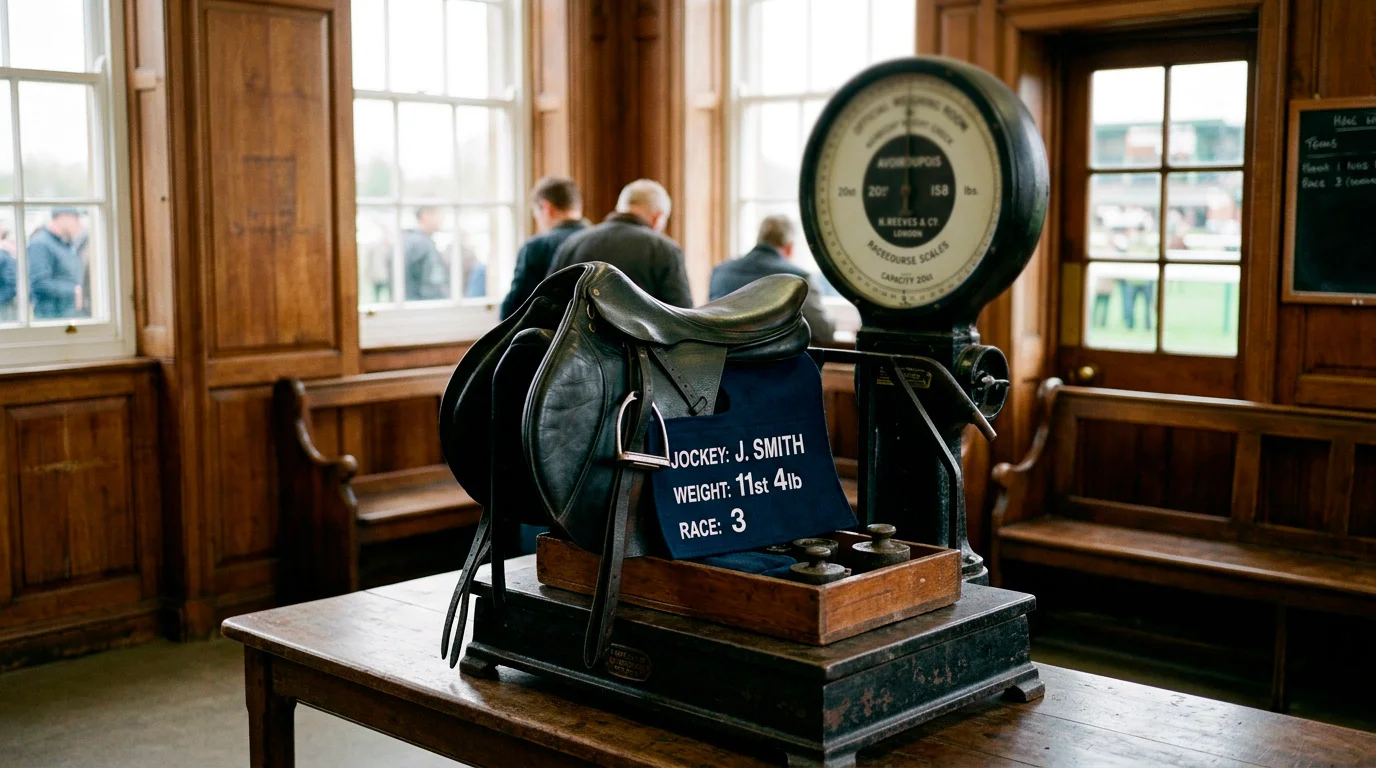
Handicap Markets: BHA Ratings and Weight Allocation
Open any Wednesday racecard in the UK and count the handicaps. You’ll find five out of seven races on a typical card are handicaps. That’s not coincidence – it’s structural. As Alan Delmonte put it from the HBLB perspective, “Levy income having risen for a fourth consecutive period, it may seem counterintuitive that the Board continues to express caution about the sustainability of this trend. This wariness derives from an ongoing fall in betting turnover on British horseracing.” The handicap programme is the heart of the levy economy. Without competitive handicaps, the betting volume collapses, the levy shrinks, and the prize-money system that funds the rest of UK racing starts to wobble.
A handicap is a race where the BHA’s official handicapper has assigned weights to each runner with the explicit goal of equalising their chances. The better the horse, the more weight it carries. In theory, every horse in a perfectly framed handicap should cross the line at the same time. In practice, they don’t, and that’s where the betting markets find their grip.
That equalisation logic separates handicaps from the other two main UK race formats. Conditions races set weights according to the conditions of the race – age, sex, previous wins – not according to horse ability. Group races use a weight-for-age scale. Handicaps alone use individual ratings, which means each race becomes a competition of weighted abilities rather than a parade of the most talented horse. The pricing logic in betting markets follows from that distinction.
How BHA Ratings Translate to Weights
The BHA handicapper rates every horse on a numerical scale, updated through a horse’s career as performance data accumulates. The rating translates to weight at one pound per rating point, simple as that. A horse rated 96 in a handicap carries seven pounds more than a horse rated 89 in the same race. The top weight in the handicap is set by the highest-rated runner, and the rest of the field’s weights step down from there.
The arithmetic is straightforward enough that you can do it on a racecard. Find the top-rated horse, note its weight, work down. A typical Class 3 Flat handicap might have a rating range of 95 to 75. That’s 20 pounds difference between top and bottom of the handicap – over the typical race distance, the handicapper’s model assumes that weight differential should equalise the two horses’ chances within a length or two.
The lower-rated horses get the apprentice claim adjustment too. Apprentice jockeys can claim a weight allowance – 3, 5, or 7 pounds depending on their experience level – which gets subtracted from their mount’s allotted weight. So a horse rated 75 carrying a 5-pound claimer effectively carries the equivalent of a 70-rated horse’s weight, despite officially being rated 75. The market often factors this in faster than the official handicap mark suggests.
Ratings shift after every race. A horse that wins by a wide margin gets raised in the handicap. A horse that disappoints gets dropped. The BHA publishes weekly ratings updates, and the rate at which a horse’s mark moves is itself a signal – a horse on an upward rating trajectory is in form; one drifting downwards is going the wrong way. Reading the rating history alongside the form figures is a step beyond simple form study, and it’s the work that separates serious handicap punters from casuals.
A horse’s allocated weight is only one factor; you must also consider how the official going and ground conditions will impact their stamina.
Why Handicaps Pay 1/4 Each-Way Terms
Handicaps in the UK with sixteen or more runners pay four places at quarter the odds on each-way bets – versus three places at fifth odds on non-handicaps. The structural reason for the more generous fraction is competitive entry density.
When the handicapper has equalised abilities, more horses become genuine contenders. A 24-runner handicap might have 14 or 15 runners with serious win chances, where a 12-runner conditions race might have three or four. The bookmaker’s place book has to cover more outcomes, which means the place exposure is wider – and the operator passes some of that risk back to the punter as a more generous place fraction.
The 2025 field-size figures show why this matters. Flat racing averaged 8.90 runners per race in 2025 (down from 9.14 in 2024); jumps averaged 7.84 (down from 8.49). Those averages mask big variation by race type. Premier Fixtures’ Flat handicaps averaged 11.02; jumps Premier Fixtures’ handicaps 9.41. The competitive handicap programme on Saturdays and at Festivals is where the field sizes get fat enough to push into 16-plus territory and trigger the four-place terms.
Strategic implication for the each-way punter – the value of each-way as a bet type rises with handicap field size. A 22-runner Coral Cup handicap at Cheltenham, four places at quarter odds, is structurally a better each-way bet than a 12-runner Champion Hurdle, three places at fifth. The combination of more places paid and the better fraction is a meaningful uplift on long-priced selections.
Where Punters Find Value in Handicaps
The handicapper is trying to equalise the field, but the model is imperfect. Genuine value in handicap markets sits in the gaps where the handicapper hasn’t yet caught up to a horse’s true ability.
The classic value spot is the well-handicapped second-season novice – a horse that ran in maidens last term, won once at a low mark, and is now entering its first handicap at a rating that hasn’t been tested by competition yet. If the maiden form contained better-than-rated performances against horses that have since proved much better, the new handicap mark can be light by five or six pounds. The market often catches this on the second or third handicap run, after the horse has shown form. The smart play is at the first handicap appearance, before the price contracts.
The other repeat value pattern is the dropping-mark improver. A horse that’s lost form, drifted down the handicap by a stone or more, and is reappearing after a wind operation, a gelding operation, or simply a long break. The under-18 attendance figure at UK racecourses jumped 17 per cent year on year in 2025 – a sign that the next generation of punters is engaging with the sport – and those new punters tend to back form, not rating shifts. The handicapper’s drop-mark dynamic stays underexploited because most casual money flows toward recent winners.
Trainer patterns matter too. Some yards specifically aim horses at handicap marks they think are exploitable, holding them back from extending their form until the rating drops. Reading trainer history – which yards are notorious for the “well-handicapped debut” – adds an extra layer to value-spotting. Newmarket and Lambourn both have trainers who play this game well, and their handicap winners often go off shorter than the market initially suggests because the smart money has read the pattern.
Mastering these variables is what separates casual punters from those who rely on a professional horse racing betting guide for their daily selections.
Flat Handicaps vs Jumps Handicaps
The two codes’ handicaps look superficially similar but behave very differently from a betting standpoint. Field sizes differ – 2025 Flat average of 8.90 versus jumps 7.84 across all races – but inside handicaps specifically, the gap is wider. A Saturday Flat handicap will routinely run 14 to 18 runners; a Saturday jumps handicap might run 12 to 14, with bigger fields only at Festivals.
The settlement maths differs too. Jumps races have a fall rate – 3 to 5 per cent across chases, somewhat lower over hurdles – that makes placed positions more accessible to outsiders. A 25/1 chaser benefits from a fall rate that removes early-leading favourites; the same Flat outsider has no equivalent mechanism for the front-running jolly to drop out. That structural difference is why each-way on jumps handicaps tends to produce better long-run ROI than each-way on equivalent-field-size Flat handicaps.
Going matters more on jumps. Heavy ground at Sandown over fences produces field-spread results that bear little relation to paper form. The same heavy ground on a Flat handicap at the same course is much less disruptive to the result – Flat horses can compensate for soft ground with sound technique, while jumps horses need genuine stamina and jumping precision in deep going. The strategic implication is that going-driven each-way value is much fatter on jumps than on Flat.
For punters new to handicap betting, my general rule is to learn jumps handicaps first. The form lines are more durable (jumps horses race less frequently and the data is less noisy), the field shapes are more readable, and the each-way structure pays out more often. Flat handicaps reward deeper form study and a tighter sense of ground and draw biases. The deeper reading on how going actually moves these markets sits in the piece on going and bet selection.
Handicap Betting Questions
Two questions come up frequently from punters new to the handicap programme – how apprentice claims affect pricing, and whether handicap marks can ever drop low enough to manufacture a guaranteed favourite.
Articles
Created by the "typesbethors" editorial team.
